
Canoeing at the 2020 Summer Olympics
Canoeing at the 2020 Summer Olympics featured 16 events.

Thadius856 (SVG conversion) & Parutakupiu (original image) · Public domain
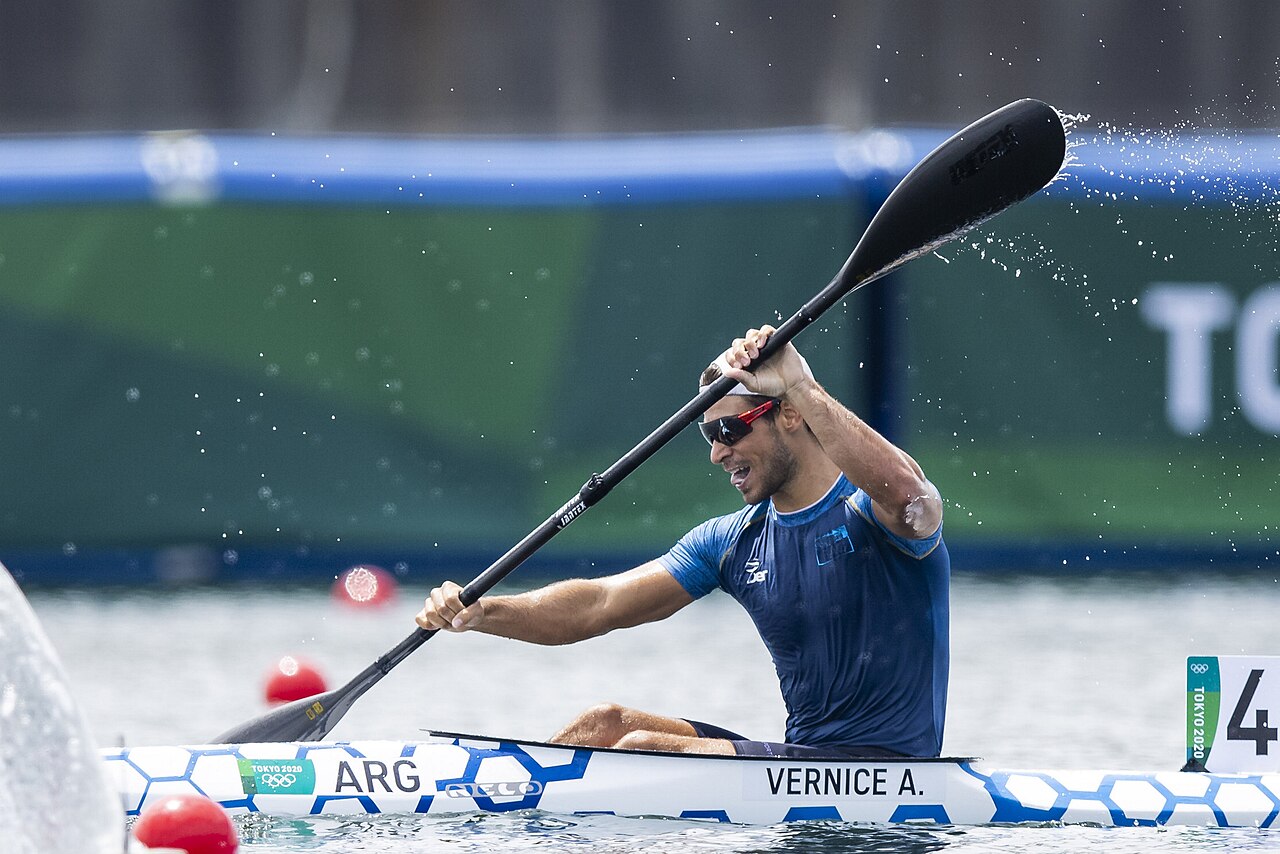
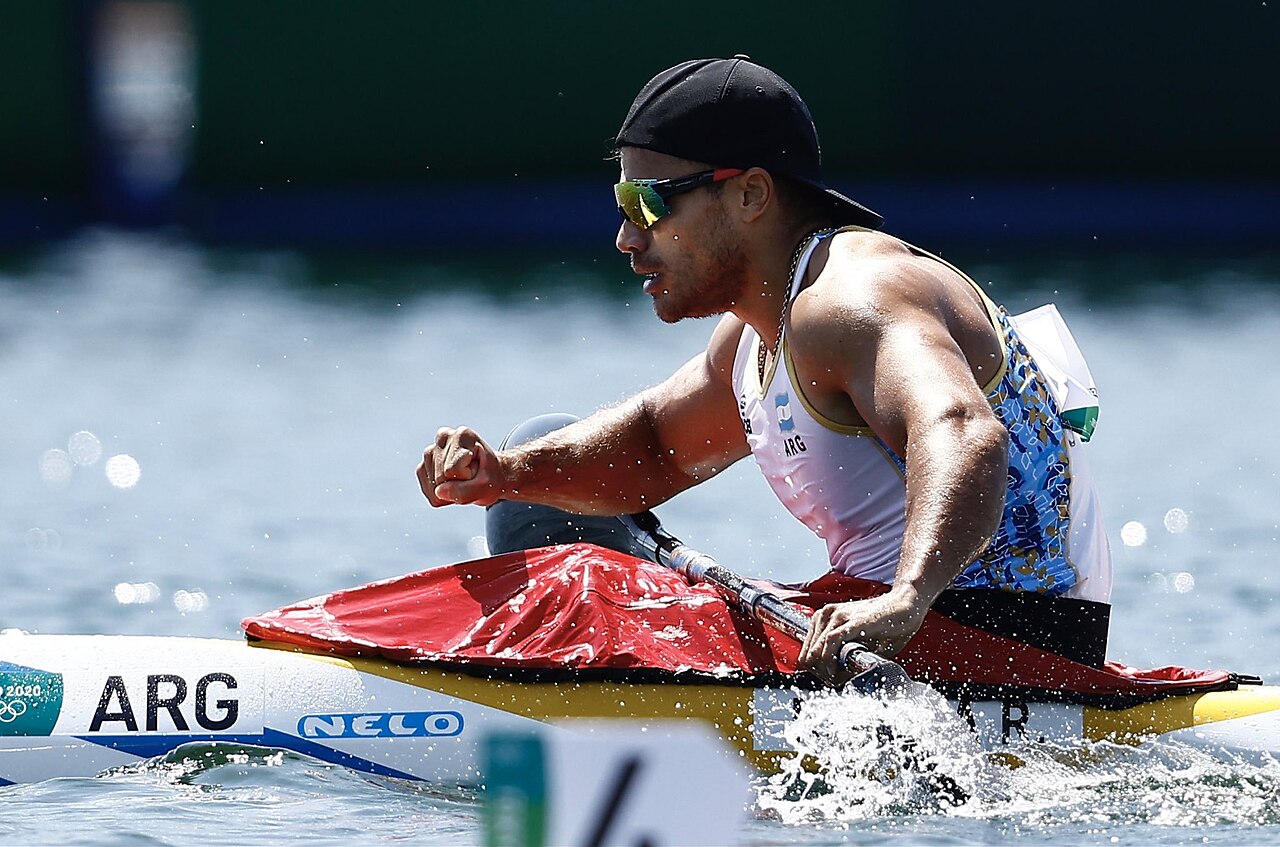
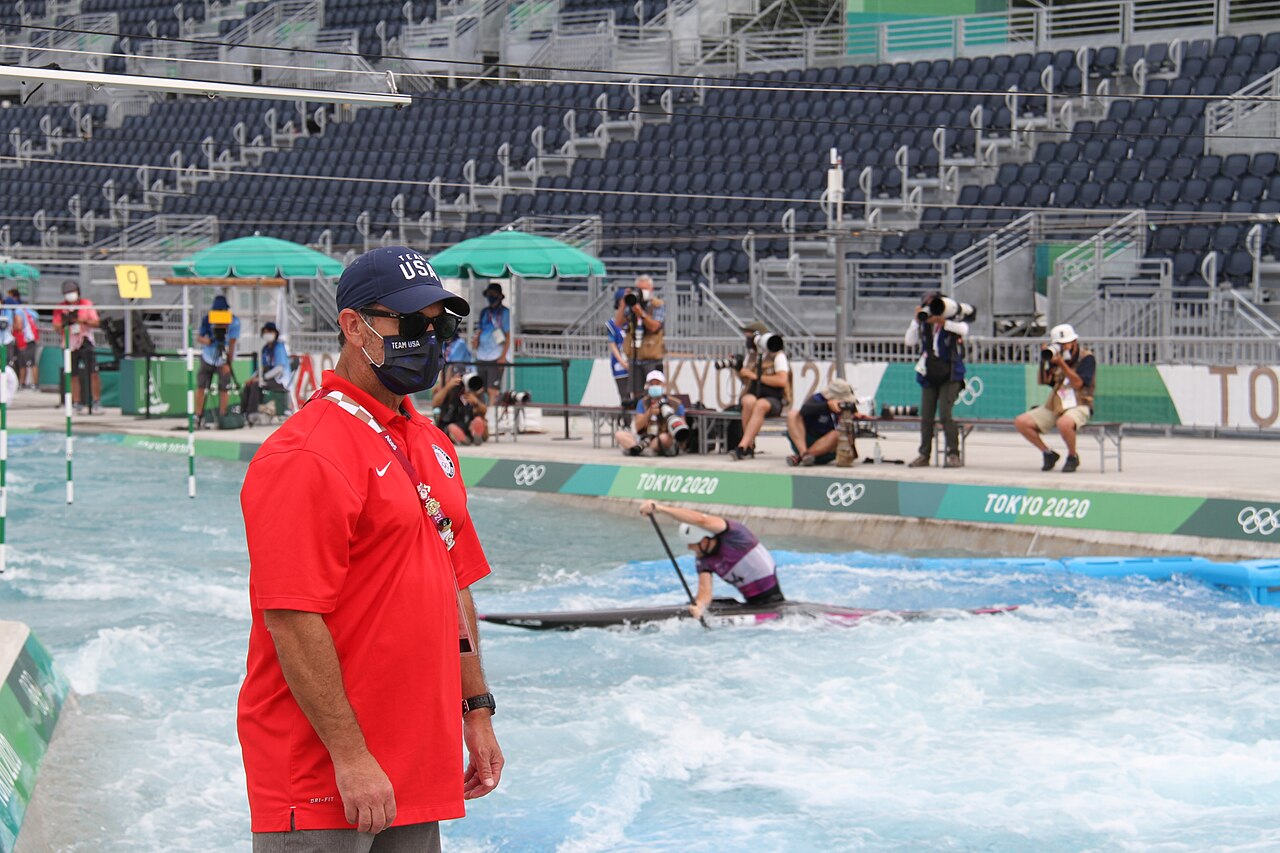
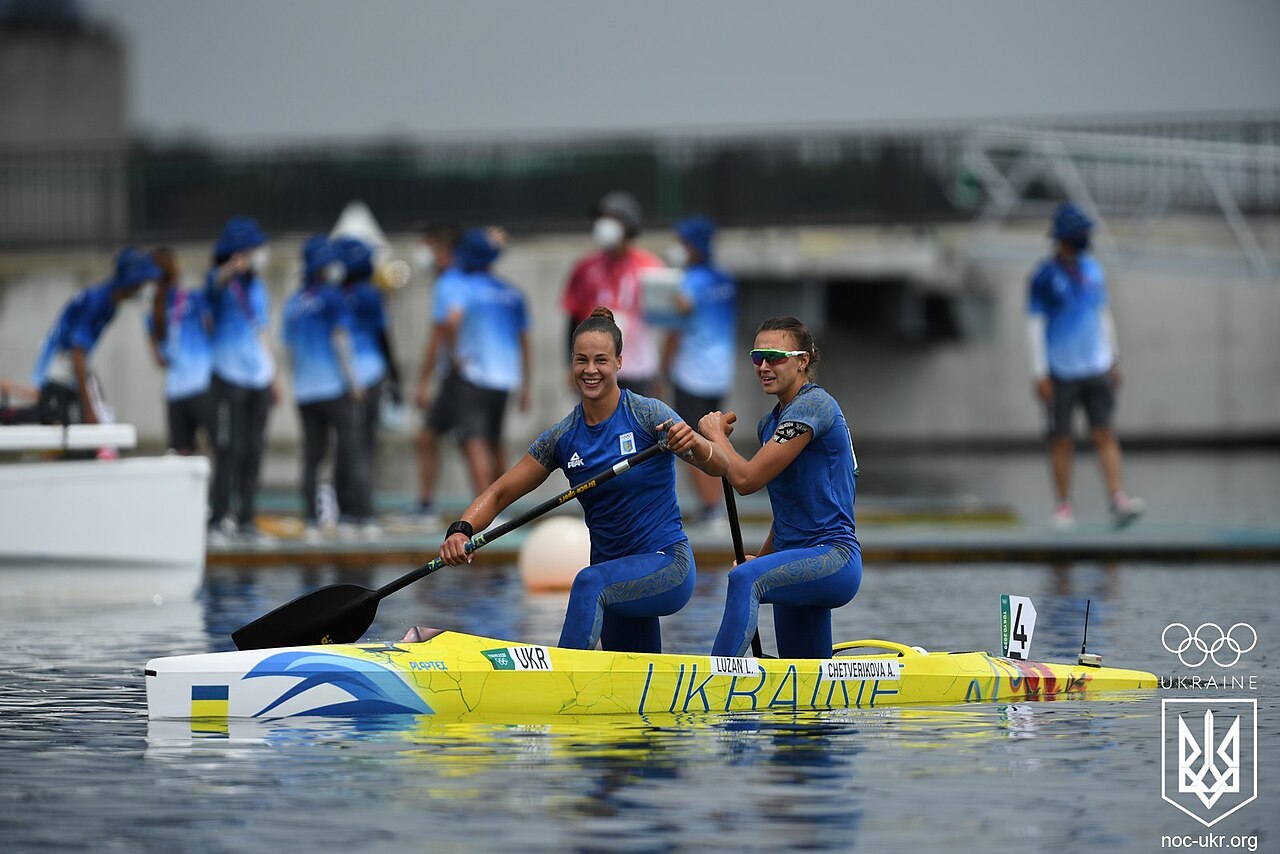
At the 2020 Summer Olympics in Tokyo, canoeing was split into two disciplines: slalom, held from 25 to 30 July 2021 at the Kasai Canoe Slalom Course, and sprint, held from 2 to 7 August at Sea Forest Waterway. A total of 16 events made up the programme, which included three replacements and one retention from the 2016 Games. In sprint, the men’s C-1 200 metres and men’s K-2 200 metres were swapped for women’s C-1 200 metres and women’s C-2 500 metres. In slalom, the men’s C-2 was removed and women’s C-1 was added. These adjustments were part of the Olympics’ push for greater gender equality. Additionally, the men’s K-4 1000 metres event was removed entirely while the women’s K-4 500 metres was retained from the previous Games.
- events
- 16
- disciplines
- canoe slalom, canoe sprint
- slalom venue
- Kasai Canoe Slalom Course
- sprint venue
- Sea Forest Waterway
- slalom dates
- 25 to 30 July 2021
- sprint dates
- 2 to 7 August 2021
Lore & Background
The 2020 Summer Olympics canoeing program saw three replacements and one retention from the 2016 Games. In sprint, the men's C-1 200 metres and men's K-2 200 metres were replaced with women's C-1 200 metres and women's C-2 500 metres. In slalom, the men's C-2 was removed and women's C-1 was added. These three changes were part of the Olympics' move towards gender equality. Additionally, the men's K-4 1000 metres event was removed entirely while the women's K-4 500 metres was retained, having been part of the program since 1984.
Reader's Guide
Canoeing at the 2020 Summer Olympics marked a significant step toward gender parity in the sport, with the introduction of women's C-1 in slalom and women's C-1 200 metres and women's C-2 500 metres in sprint, replacing men's events. The slalom events took place at the Kasai Canoe Slalom Course, while sprint events were held at Sea Forest Waterway. The program featured 16 events total, with the men's K-4 distance shortened from 1000 to 500 metres. These changes reflected broader Olympic efforts to balance representation. The competition schedule ran from 25 July to 7 August 2021, with slalom first and sprint following. The event was part of the Tokyo 2020 Games, which were postponed to 2021 due to the COVID-19 pandemic.
Did You Know?
- Canoeing at the 2020 Summer Olympics featured two disciplines: canoe slalom and canoe sprint.
- The slalom competitions were held at the Kasai Canoe Slalom Course.
- The sprint events were staged at Sea Forest Waterway.
- Three event replacements and one retention from 2016 were made, as part of the Olympics' move towards gender equality.
The Unprecedented Dual-Award Bidding
When the International Olympic Committee opened the 2024 bidding process in September 2015, five cities entered the race: Budapest, Hamburg, Los Angeles, Paris, and Rome. The field quickly narrowed as Budapest, Hamburg, and Rome all pulled out, mirroring a pattern seen during the 2022 Winter Olympics selection when multiple candidates dropped and left only two finalists. Faced with just two remaining contenders, the IOC executive board convened in Lausanne in June 2017 to explore a novel approach: awarding both the 2024 and 2028 Games in a single decision. An Extraordinary IOC Session in July 2017 green-lit this simultaneous process. Paris, celebrating the centennial of its 1924 Games, was the natural choice for 2024, while Los Angeles emerged as the sole candidate for 2028, backed by an additional $1.8 billion in IOC funding. The LA City Council approved the bid unanimously in August 2017, and on September 13, the IOC cast a unanimous vote to formally award the Games. President Thomas Bach singled out the bid's reliance on existing and temporary venues and its fully private funding model as record-setting achievements.
A Historic Three-Time Host
Los Angeles 2028 will represent a milestone in Olympic history that no other city outside Europe has yet achieved. Having previously staged the Summer Games in 1932 and 1984, the city will become only the third host to welcome the Olympics three times, joining London (1908, 1948, 2012) and Paris (1900, 1924, 2024) in that exclusive club. For the United States, the event marks the fifth Summer Olympics and the ninth Olympic Games of any kind held on American soil. The competition is scheduled for July 14 through 30, 2028, with events spread across the Greater Los Angeles area and two additional subsites in Oklahoma City. Notably, these will be the first Summer Olympics presided over by IOC president Kirsty Coventry, adding another layer of institutional significance. The Games also carry a broader symbolic weight: they demonstrate that a single city can sustain the Olympic flame across nearly a century, from the 1932 era through the modern digital age, while adapting to new sports, new funding models, and new expectations from both athletes and spectators.
Building the Transit Backbone
Transportation planning for Los Angeles 2028 has undergone significant evolution since the bid was first approved. Civic leaders initially pledged a fully car-free Games, launching the Twenty-eight by '28 initiative under former Mayor Eric Garcetti to accelerate 28 infrastructure projects funded through countywide sales taxes (Measure R and Measure M). Mayor Karen Bass later added strategies like encouraging remote work during the event to ease network pressure. However, by March 2024 the original project list had been substantially revised: eleven entries, including five rail line expansions, were swapped for smaller, more achievable undertakings. By late 2024, observers flagged that only 5.2 percent of LA Metro's $3.3 billion Olympic-related project budget had been secured, with several projects running behind schedule and uncertainties over agency staffing and interagency coordination. These realities prompted a strategic pivot from a fully car-free vision to a more pragmatic transit-first framework. Key rail work continues, including the D Line extension being built in three phases through 2027 and the Regional Connector, completed in 2023, which links downtown light rail lines for smoother transfers.
A Shifting Olympic Program
The 2028 Games will feature a notably refreshed athletic program that reflects the IOC's ongoing effort to attract younger audiences and broaden the sport's global appeal. Three disciplines that debuted as optional events at the 2020 Tokyo Olympics—skateboarding, sport climbing, and surfing—have now been elevated to the core program, meaning they are guaranteed a permanent place in future Summer Games. Meanwhile, flag football and squash will make their Olympic debuts as optional sports. The program also welcomes back several long-absent competitions: baseball and softball return to the roster, cricket appears for the first time since 1900, and lacrosse re-enters as a medal event for the first time since 1908. This mix of new, returning, and promoted sports signals a deliberate strategy to balance tradition with novelty. Public sentiment in Los Angeles has shifted somewhat over the years: in 2018, polls from LMU and the LA Times showed more than 88 percent of residents supporting the hosting decision, while a 2023 Suffolk University and LA Times survey found 57 percent viewing the Games positively and 20 percent seeing a negative impact.
Gallery

Frequently Asked Questions
Where did canoeing take place at the 2020 Summer Olympics?
The two disciplines were staged at separate Tokyo venues: slalom racing was held at the Kasai Canoe Slalom Course, while sprint events were contested at Sea Forest Waterway.
How many canoeing events were on the 2020 Olympic programme?
Sixteen events in total made up the canoeing competition, divided between the slalom and sprint disciplines.
What events changed in canoeing between Rio 2016 and Tokyo 2020?
Four events were swapped out: the men's C-1 200 m and men's K-2 200 m in sprint were replaced by women's C-1 200 m and women's C-2 500 m, and in slalom the men's C-2 was dropped in favour of a new women's C-1.
When were the canoe slalom and sprint competitions held at Tokyo 2020?
Slalom racing ran from 25 to 30 July 2021, and sprint events followed from 2 to 7 August 2021, both during the year-delayed 2020 Games.
Why did the IOC alter the canoeing events for the 2020 Olympics?
The four event replacements were part of the Olympic programme's broader push to close the gender gap and expand women's opportunities in the sport.
More in Canoeing at the Summer Olympics 1-23
Spotted an error? Know more?
This is a living reference — every entry is fact-audited, and reader corrections feed straight into our audit queue. Suggest an edit · See this site's audit record