
Canoeing at the 2016 Summer Olympics
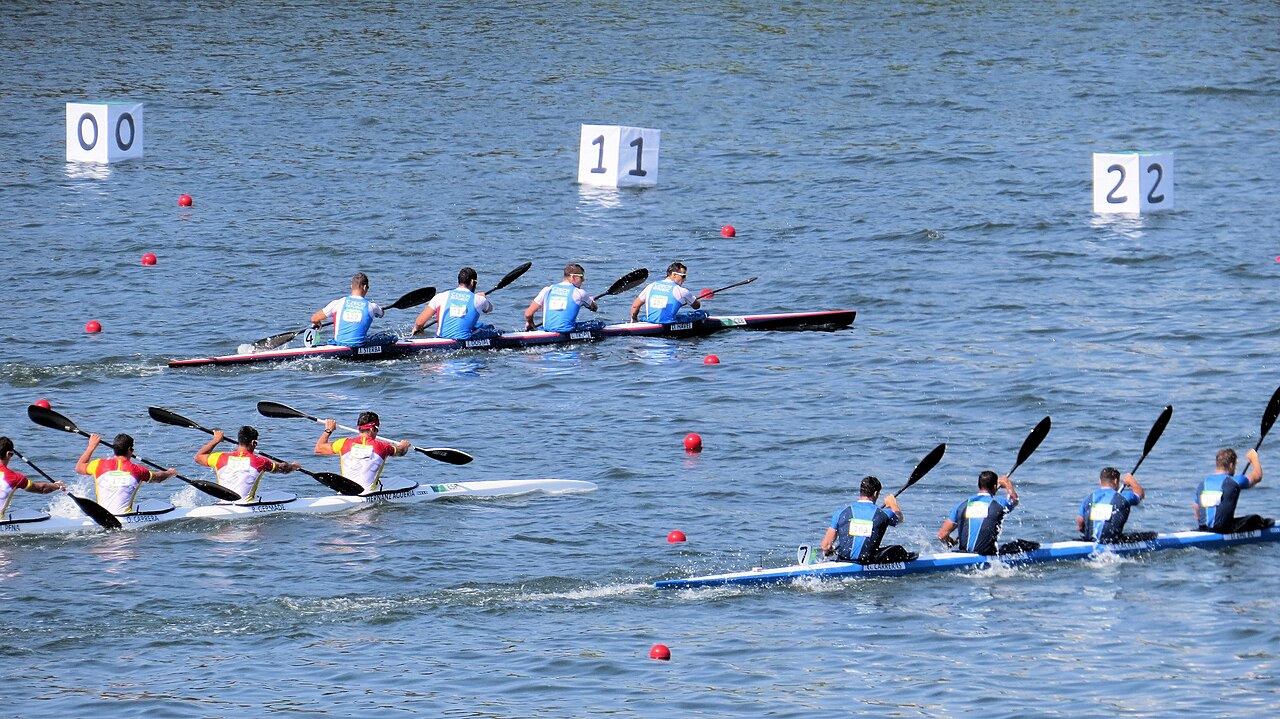
Canoeing at Rio 2016 featured slalom and sprint events.

Jonas de Carvalho from Rio de Janeiro, Brasil · CC BY-SA 2.0
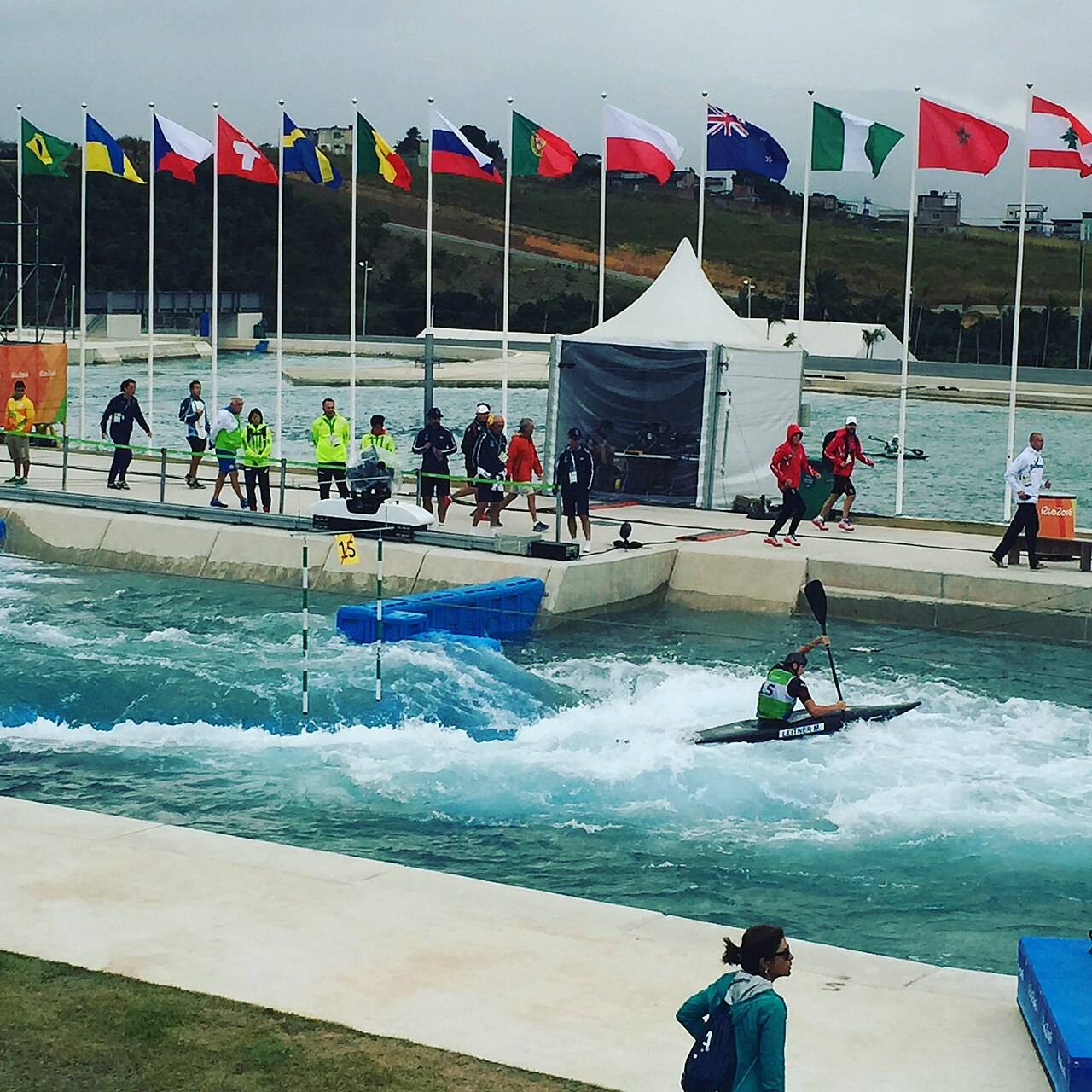
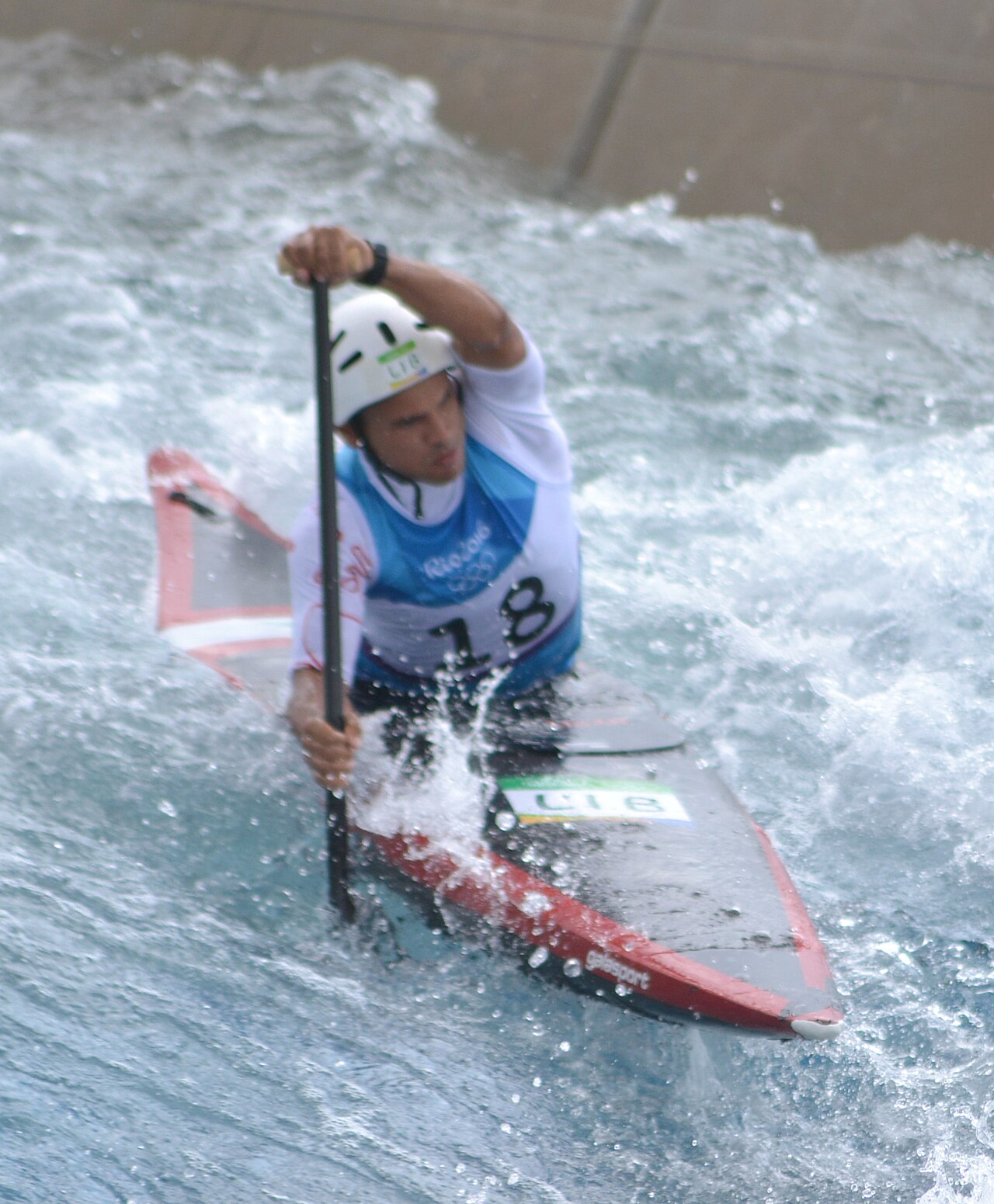
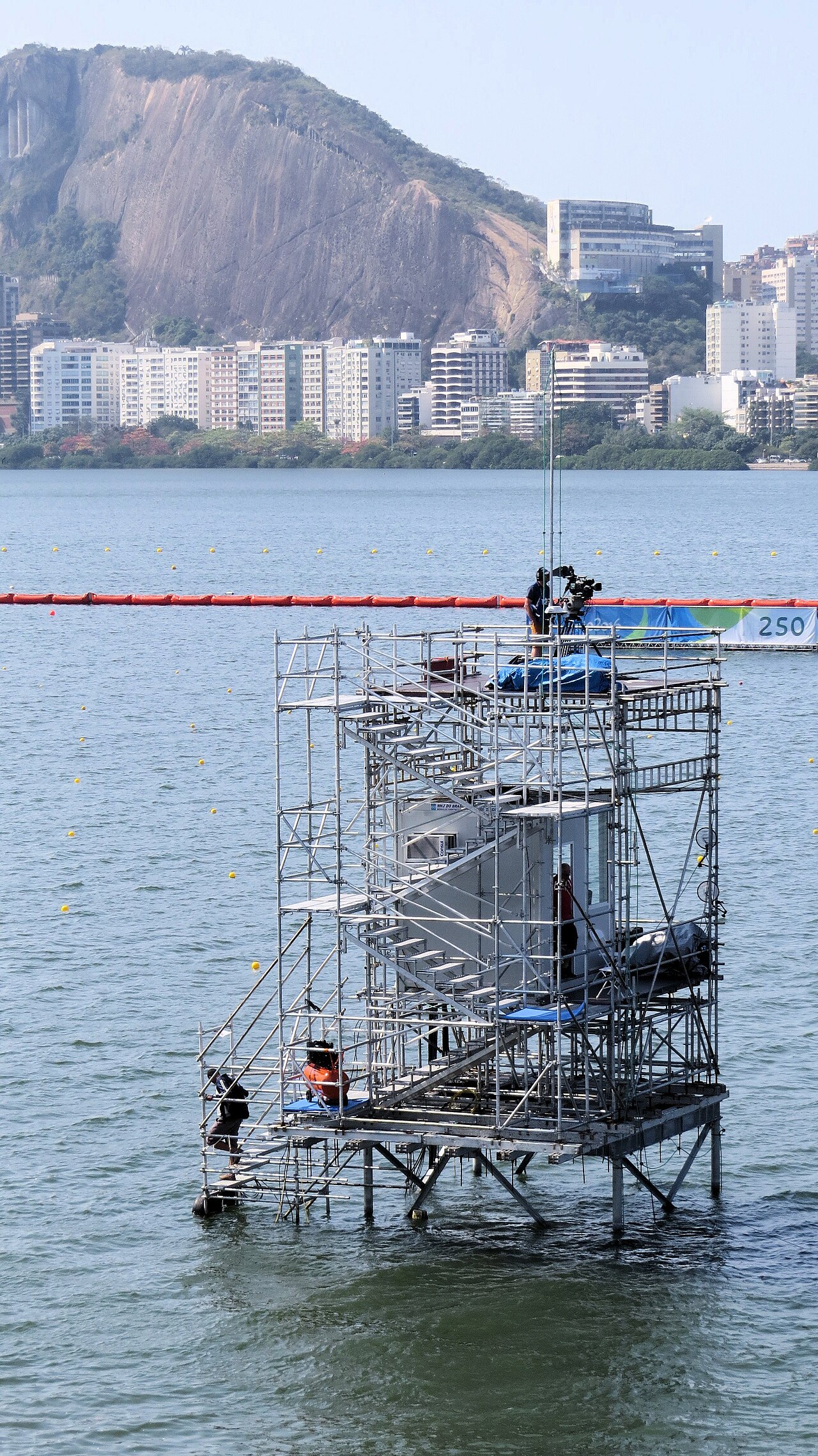
At the 2016 Summer Olympics in Rio de Janeiro, canoeing featured two disciplines: slalom, running from 7 to 11 August, and sprint, from 15 to 20 August. The slalom events were held at the Olympic Whitewater Stadium, while the sprint races took place at Lagoa Rodrigo de Freitas in Copacabana. That lagoon caused concern among athletes after the Oswaldo Cruz Foundation, a Brazilian federal lab, detected genes of drug-resistant super bacteria in its waters. In total, roughly 330 competitors took part across 16 events. For both slalom and sprint, a fresh qualification system was introduced, with quotas decided by the International Canoe Federation in August 2014.
- Disciplines
- Canoe slalom and canoe sprint
- Dates
- Slalom: 7–11 August; Sprint: 15–20 August
- Venues
- Olympic Whitewater Stadium (slalom); Lagoa Rodrigo de Freitas (sprint)
- Number of events
- 16
- Number of athletes
- Around 330
- Notable incident
- Serghei Tarnovschi of Moldova stripped of bronze medal due to failed doping test
Lore & Background
The canoeing events at the 2016 Summer Olympics were marked by two distinct venues and a new qualification system. The slalom events were held at the Olympic Whitewater Stadium, while the sprint races took place at Lagoa Rodrigo de Freitas in Copacabana. The location for canoeing events was a source of concern for athletes because the Brazilian federal government's Oswaldo Cruz Foundation lab found genes of drug-resistant super bacteria in Rodrigo de Freitas lagoon. Around 330 athletes competed across 16 events, with quotas set by the International Canoe Federation in August 2014.
Reader's Guide
Canoeing at the 2016 Summer Olympics represented a continuation of the sport's Olympic tradition, with both slalom and sprint disciplines contested. The event was notable for the introduction of a new qualification system for both disciplines, established by the International Canoe Federation in August 2014. The sprint venue, Lagoa Rodrigo de Freitas, drew attention due to the discovery of drug-resistant super bacteria genes by the Oswaldo Cruz Foundation lab, raising health concerns among athletes. A significant controversy occurred when Serghei Tarnovschi of Moldova, who originally finished third in the men's C-1 1000 metres, was stripped of his bronze medal after failing a doping test. This incident underscored ongoing anti-doping efforts in the sport. The competition featured 16 events with around 330 participants, reflecting the global reach of canoeing. The legacy of these Games includes heightened awareness of water quality issues at competition sites and the continued evolution of Olympic qualification standards.
Did You Know?
- Canoeing at the 2016 Summer Olympics was contested in two disciplines: canoe slalom and canoe sprint.
- The sprint events were held at Lagoa Rodrigo de Freitas, where drug-resistant super bacteria genes were found.
- Serghei Tarnovschi of Moldova was stripped of his bronze medal in the men's C-1 1000 metres due to a failed doping test.
- A new qualification system for both slalom and sprint was created, with quotas set by the International Canoe Federation in August 2014.
The Unprecedented Dual-Award Bidding Process
What began as a five-city race for the 2024 Summer Olympics collapsed into a two-horse contest after Budapest, Hamburg, and Rome all pulled out of the 2015 candidate list. The IOC, drawing a parallel to the 2022 Winter Games bidding where four cities withdrew, moved quickly to find a resolution. After meetings in Denmark in early 2017 and an executive board session in Lausanne in June, the IOC proposed something never before attempted: awarding both the 2024 and 2028 Games simultaneously. An Extraordinary Session in July 2017 green-lit the plan. Paris, whose 2024 hosting would coincide with the centennial of its 1924 Games, was the natural fit for the earlier slot. On July 31, 2017, Los Angeles was named the sole 2028 candidate, backed by an additional $1.8 billion in IOC funding. The City Council approved unanimously in August, and on September 13, 2017, the 131st IOC Session in Lima, Peru, confirmed the award by unanimous vote. President Thomas Bach singled out the bid's reliance on existing and temporary venues and its entirely private funding model as record-setting achievements.
Transportation Ambitions Meet Ground Reality
Los Angeles civic leaders initially pledged to deliver a fully car-free Olympic experience, a bold promise aimed at cutting congestion, shortening commutes, and tightening security perimeters around venues. Former Mayor Eric Garcetti's Twenty-eight by '28 initiative was designed to accelerate 28 infrastructure projects, drawing on Measure R and Measure M sales-tax revenue. Mayor Karen Bass added remote-work encouragement during the Games to ease transit demand. Yet by March 2024 the original project list had been substantially overhauled: eleven entries, including five rail expansions, were swapped for smaller, more achievable undertakings. By late 2024, observers flagged that only 5.2 percent of LA Metro's $3.3 billion Olympic-related portfolio was actually funded, with several projects lagging behind schedule. Compounding the problem were staffing shortages across government agencies, weak interagency coordination, and a venue list that remained unsettled well into the planning window. Faced with these constraints, officials quietly abandoned the car-free slogan in favor of a more pragmatic transit-first strategy, while the D Line extension and the 2023-completed Regional Connector continued to shape the city's rail backbone.
A Landmark of Olympic Firsts and Program Evolution
Los Angeles 2028 carries a constellation of historical distinctions that set it apart from any previous Summer Games. It will be the fifth Summer Olympics and ninth Olympic Games overall hosted on U.S. soil, and it will make Los Angeles the third city ever to host the Summer Olympics three times, joining London and Paris. Crucially, it will be the first non-European city to achieve that three-time milestone, following its earlier stints in 1932 and 1984. The Games will also be the first to take place under the IOC presidency of Kirsty Coventry, adding another layer of institutional novelty. On the competitive program side, skateboarding, sport climbing, and surfing—introduced as optional events in 2020—will graduate into the core Olympic lineup. Flag football and squash will make their Olympic debuts as optional sports, while baseball and softball return to the schedule. Cricket reappears for the first time since 1900, and lacrosse re-enters as a medal event for the first time since 1908, giving the 2028 program a notably broad and historically layered sporting menu.
Public Sentiment and the Road to Endorsement
Local support for the 2028 bid was swift and, at first, nearly unanimous. The Los Angeles City Council voted in favor without a single dissenting vote on August 11, 2017, and the state of California issued its official endorsement just over a month later, on October 16. When Olympic officials conducted a two-day site visit in August 2018, touring newly built venues and meeting with local organizers, the political environment remained overwhelmingly positive. Polls from LMU and the Los Angeles Times at that time showed more than 88 percent of Angelenos in favor of hosting both the Olympic and Paralympic Games. However, public opinion proved less static than early numbers suggested. A March 2023 survey conducted by Suffolk University in partnership with the LA Times revealed a more divided picture: 57 percent of residents still believed the Games would benefit the city, but 20 percent now expressed the view that the event would have a negative impact. The shift underscores how long the runway to 2028 is and how sustained engagement will be needed to maintain community buy-in as construction deadlines and budget realities come into sharper focus.
Gallery
Frequently Asked Questions
What disciplines were featured in canoeing at the 2016 Summer Olympics?
Rio 2016 split the sport into two distinct disciplines—slalom and sprint—spread across 16 events in total. Slalom was contested from 7 to 11 August, while sprint followed later in the schedule from 15 to 20 August.
Where were the canoeing races held in Rio?
Slalom paddlers raced at the purpose-built Olympic Whitewater Stadium, whereas sprint competitors took to Lagoa Rodrigo de Freitas, the lagoon situated near Copacabana.
How many athletes competed in canoeing at Rio 2016?
Roughly 330 paddlers from around the world took part, divided across the 16 slalom and sprint events.
What doping scandal affected canoeing at the 2016 Olympics?
Moldova's Serghei Tarnovschi had his bronze medal revoked after failing a post-competition drug test, making him one of the more prominent doping cases of the Rio Games.
Why were sprint paddlers concerned about water quality in Rio?
The Oswaldo Cruz Foundation, a Brazilian federal laboratory, detected genes associated with drug-resistant super bacteria in Lagoa Rodrigo de Freitas, prompting health worries among the athletes who trained and raced on that lagoon.
More in Canoeing at the Summer Olympics 1-23
Spotted an error? Know more?
This is a living reference — every entry is fact-audited, and reader corrections feed straight into our audit queue. Suggest an edit · See this site's audit record